How to Remember Your Travels in Vivid Detail, Using Your Five Senses
Short answer: memory anchored to smell, sound, taste and touch lasts longer and returns more vividly than memory anchored to sight alone — because those senses connect more directly to the brain's memory centers. Write down what you noticed with each sense, not just what you photographed.
Why photos alone don't hold up
Ask someone to describe a trip using only their photo album and you'll usually get a highlight reel of monuments and skylines — accurate, but flat. That's because a photo captures one sense: sight. It says nothing about the sound of the call to prayer at dawn, the smell of rain hitting hot pavement, the exact sourness of a fruit you'd never tasted before. A year later, without that sensory anchor, most trips compress into 'it was beautiful' — true, but not a memory you can actually re-enter.
What memory science actually says
Smell is the sense most directly wired to the brain's memory and emotion centers (the olfactory bulb sits right next to the hippocampus and amygdala), which is why a specific scent can drop you back into a moment faster and more completely than a photo ever could — this is often called the 'Proust effect,' after the famous madeleine passage. Sound and touch work similarly, if less dramatically: a specific texture or an ambient noise can trigger recall that a flat visual image doesn't. The takeaway isn't 'take fewer photos' — it's that a photo alone is an incomplete anchor. Pairing it with a word or two about what you smelled, heard, tasted or touched multiplies how well the memory sticks.
How to actually do this while traveling
- At the moment something strikes you, pause for ten seconds and name what each sense is picking up — not a full description, just a word or short phrase per sense
- Prioritize the senses over the sight you'd already photograph — the photo covers sight for you
- Write it down immediately, not that evening — sensory detail fades within hours, faster than visual memory does
- Don't aim for every moment of the day — two or three sensory-rich moments per day are more valuable than a full log
A quick example
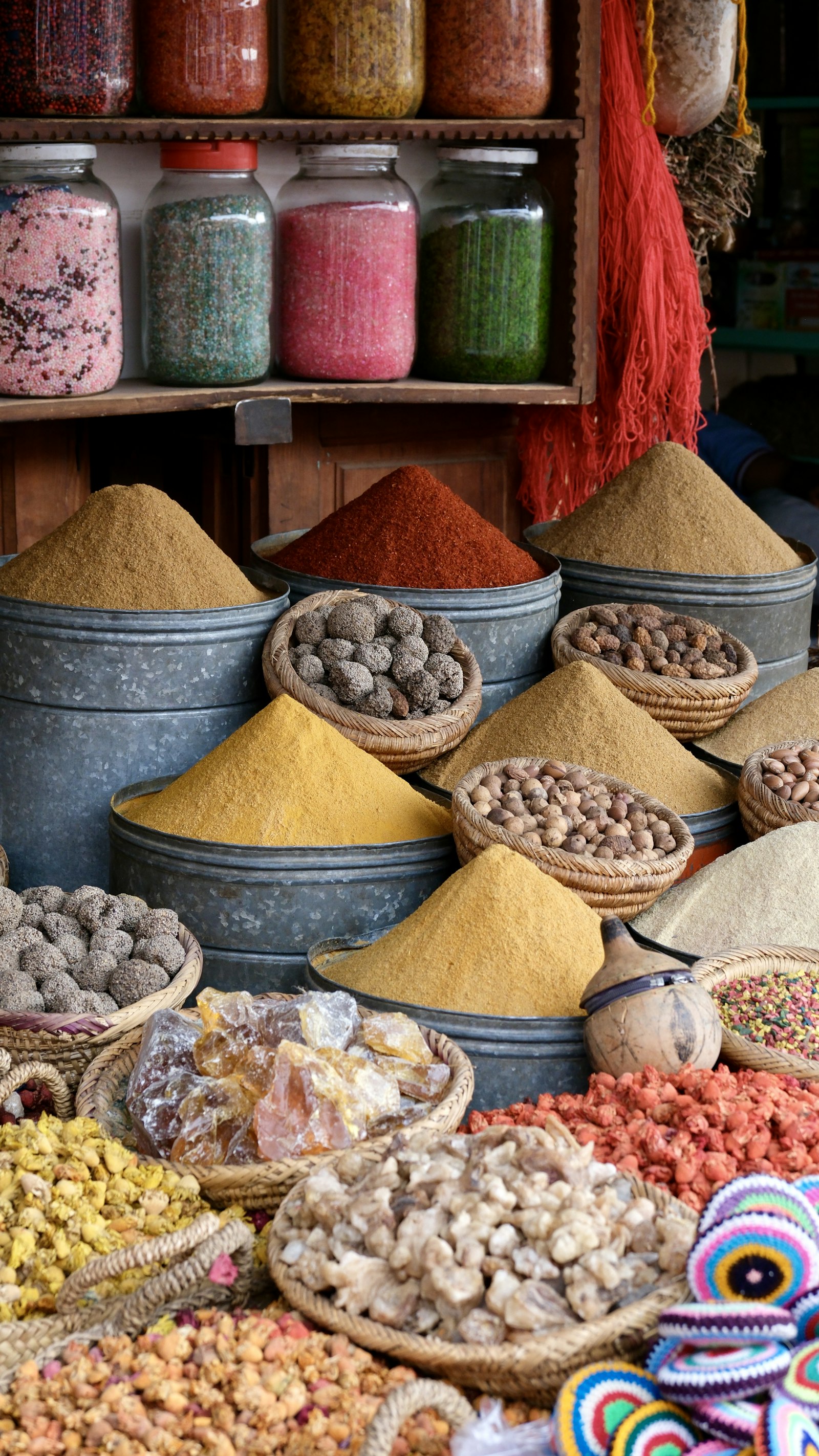
Instead of a caption like 'Marrakech market, amazing,' a sensory-anchored version might read: saw stacked cones of orange and red spices; heard a vendor calling out prices over a radio playing static-y pop music; smelled cumin and diesel exhaust; tasted a too-sweet mint tea pressed into my hands before I'd asked for it; felt the rough weave of a rug a seller draped over my shoulder to make his pitch. That's five short phrases, maybe 20 seconds of writing — and years later, it's the version that actually puts you back there.
Frequently asked questions
Why does smell trigger memory more strongly than sight?
The olfactory bulb, which processes smell, has a direct anatomical connection to the hippocampus and amygdala — the brain's memory and emotion centers. Visual information takes a longer route through the brain before reaching those same areas, which is one reason a smell can feel more suddenly transporting than a photo.
Do I need to write a full paragraph for each sense?
No — a word or short phrase per sense is enough to anchor the memory. The goal is speed and consistency (doing it at all, on the spot) over length.
Is there an app that's built around capturing the five senses?
Yes. WHIB structures each memory ('engram') around the five senses specifically, with a quick capture flow designed to take about 20 seconds per pin.
WHIB builds each memory around the five senses — pin what you saw, heard, smelled, tasted and touched, in about 20 seconds.
Try it for free