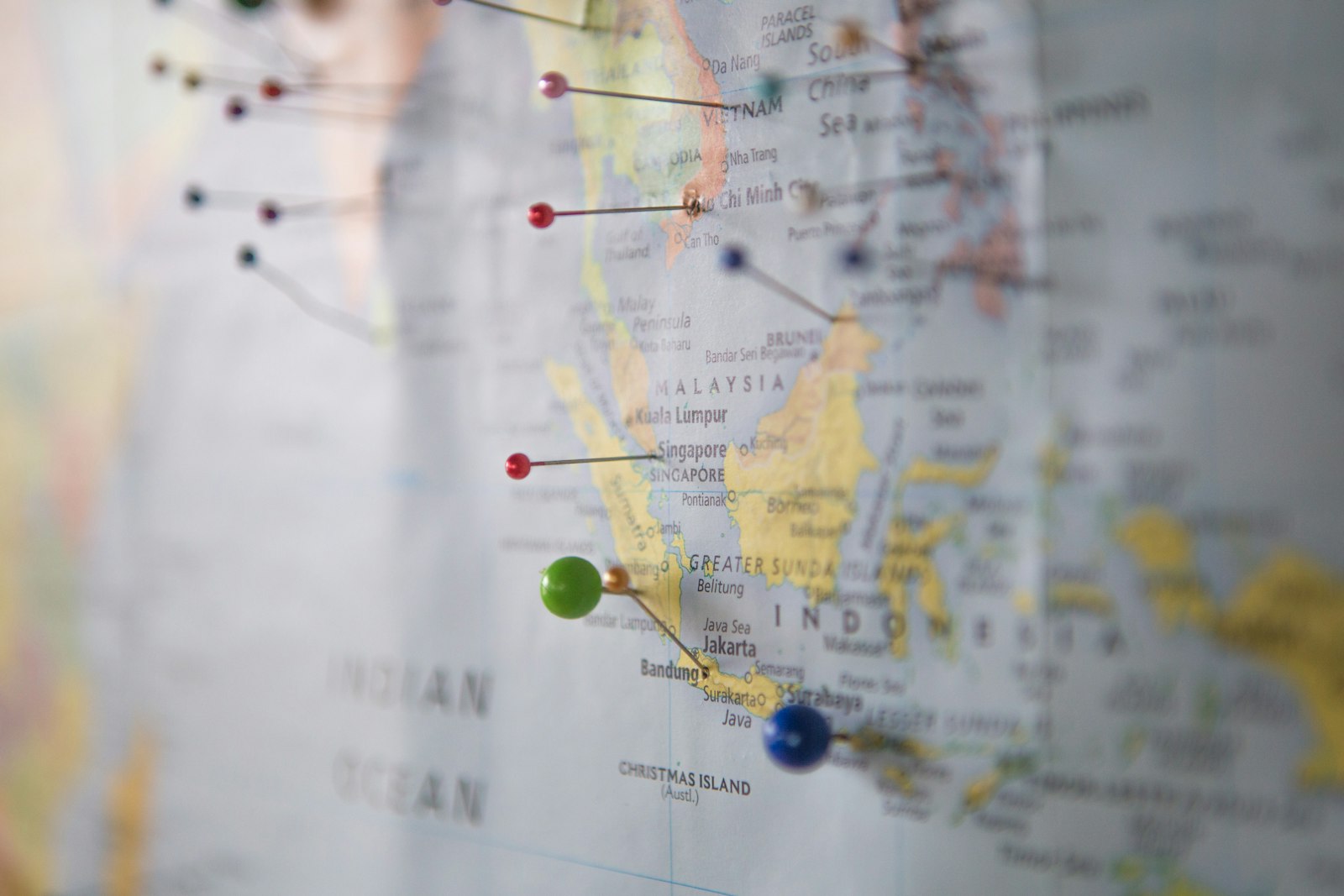
Best Apps to Track the Countries You've Visited in 2026
Short answer: Been and Visited are the simplest pure counters, Polarsteps is best for logging a specific trip live, Google Timeline tracks automatically but stays on your device only, and WHIB adds the memory behind the count. Here's how they actually differ.
What 'tracking countries' actually means
Most apps in this category do one of two things: count the countries you've set foot in and show a percentage of the world, or log a live route while you travel (flights, stops, distance). A few try to do both. None of that is wrong — a scratch-map score is genuinely satisfying — but it's worth knowing which one you actually want before picking a tool, because 'countries visited' and 'a record of the trip' are different jobs.
Been / Visited — the pure counter
Been (also known as Visited on some platforms) does one thing well: you tap the countries, states or territories you've been to, and it shows your percentage of the world on a scratch-map style visual. It's fast, satisfying, and good for the 'how much of the world have I seen' bragging-rights use case. It doesn't ask what you did there or how it felt — it's a checklist, by design.
Polarsteps — the live trip logger
Polarsteps shines during a specific trip: it auto-tracks your route with GPS, builds a map of your journey day by day, and lets friends and family follow along in real time. It's built for the trip, not the archive — most people use it for one journey at a time (often a long backpacking or gap-year trip) rather than as a lifetime record of every country visited.
Google Maps Timeline — automatic, but device-only now
Timeline auto-logs everywhere your phone has been, which used to make it a decent passive travel history. Since Google moved Timeline data to on-device-only storage, that history no longer lives safely in the cloud — it's tied to the phone, vulnerable to a factory reset, a lost device, or a switched account. It's still useful for 'where was I on this date,' but it was never designed as a travel journal, and it's gotten more fragile, not less.
WHIB — the count, plus what it felt like
WHIB tracks the countries and places you've visited like the apps above, but each pin can also hold a short sensory memory — what you saw, heard, smelled, tasted, touched — captured in about 20 seconds. It groups pins into trips, and it's private by default: nothing is visible to anyone unless you choose to share it. If a percentage is all you want, a pure counter is enough. If you want the number backed by the moments behind it, this is the gap WHIB fills.
Which one should you actually pick?
- Just want a world-percentage and a scratch-map feeling → Been / Visited
- Currently on one long trip and want a live map to share with people back home → Polarsteps
- Want a rough automatic log and don't mind it living only on your phone → Google Maps Timeline
- Want the count and the memory, kept private → WHIB
Full head-to-head comparisons
Frequently asked questions
What's the most accurate way to count visited countries?
Any of these apps can log a country once you've set foot in it — accuracy depends on you marking it correctly, not the app. The real difference between them is what else they capture beyond the count.
Can I use more than one of these apps together?
Yes — a lot of people use a pure counter for the percentage and a more detailed tool for the memories. There's no rule against running both; the count is the same data either way.
Is Google Timeline still a good travel record in 2026?
It's useful for a rough log, but since it moved to on-device-only storage it's more fragile than before — a lost phone or a factory reset can mean losing years of location history with it.
Want the count and the memory behind it, kept private by default?
Start your map for free